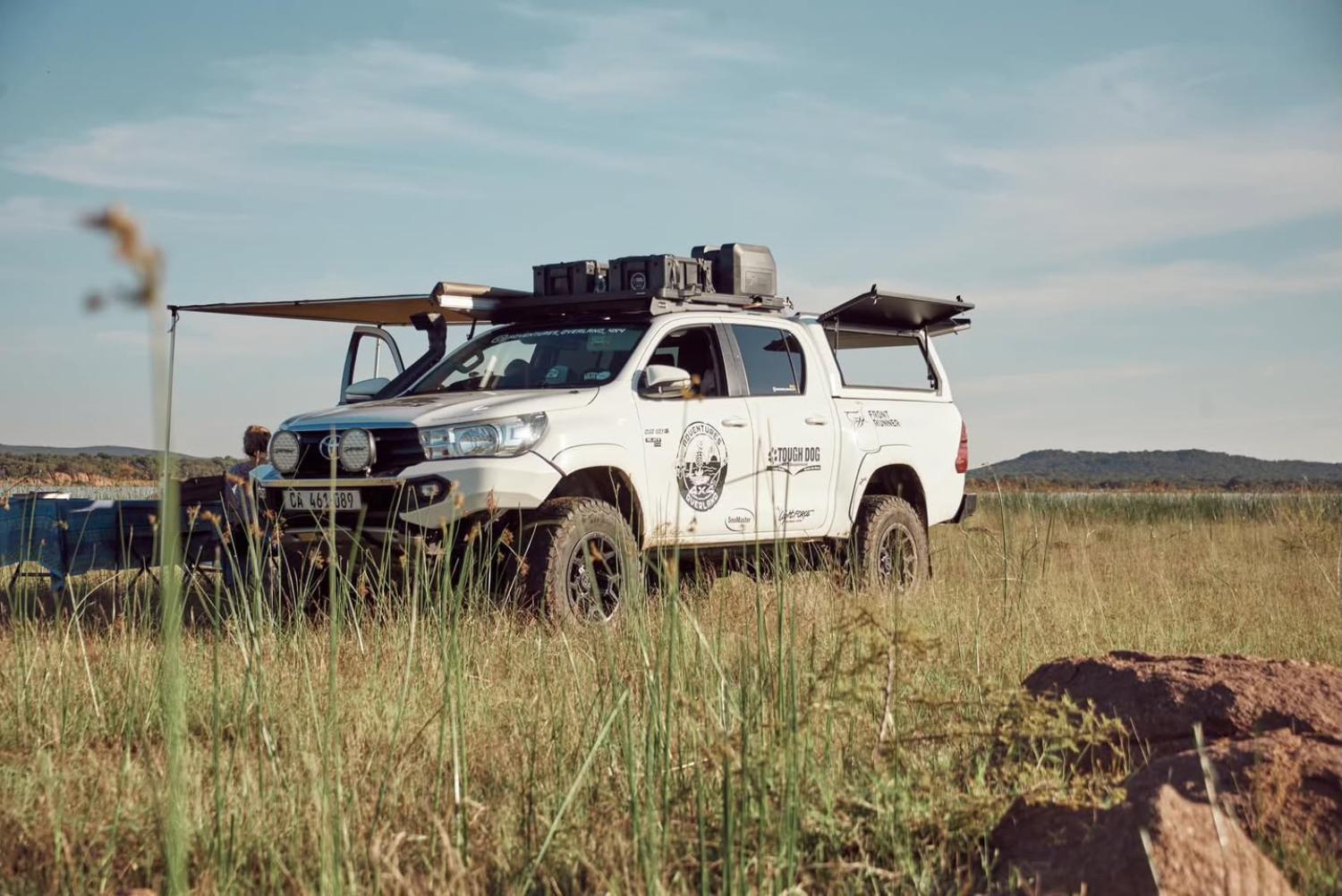
Botswana’s dry season runs from May through October, and if you know, you know – this is when the bush truly comes alive. Water sources shrink, animals congregate, and the tracks that were impassable during the rains become the routes of choice for those of us who live for the road less travelled.
But here’s the thing. The dry season is equally unforgiving to a vehicle that isn’t properly prepared. Corrugated gravel roads, deep Kalahari sand, long distances between support points, and sub-zero winter nights in the Kgalagadi will expose every weakness in your setup. The bush doesn’t care that your tyres were fine on your trip to work, or the school run.
With the season closing in fast, now is the time to run through your vehicle properly – not the morning you leave. Here’s what we look at when a vehicle rolls into our fitment bay ahead of a dry season trip.
Suspension: The Foundation of Everything
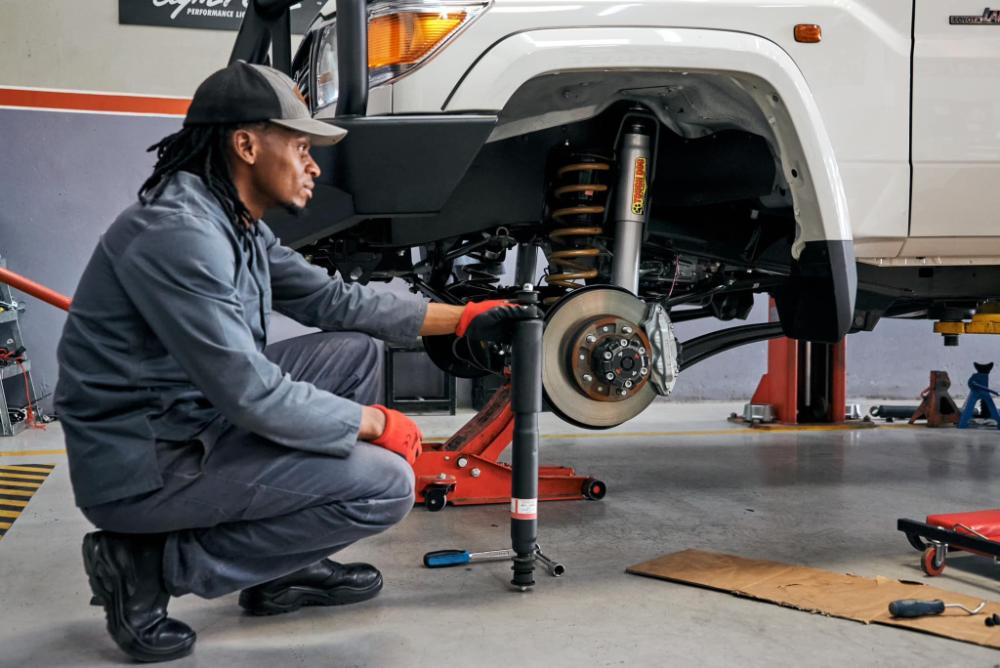
If your vehicle is still running standard factory suspension, you’re already behind. Standard suspension is engineered for comfort on tar roads with an average load – not for corrugated tracks loaded with camping gear, a fridge, roof rack, and fuel cans.
A quality suspension upgrade does three things for a dry season vehicle. It lifts the body to give you the clearance you need on rough terrain. It handles the increased load without bottoming out or wallowing through corners. And it dramatically improves driver comfort over the long corrugated sections that will rattle a stock vehicle to pieces.
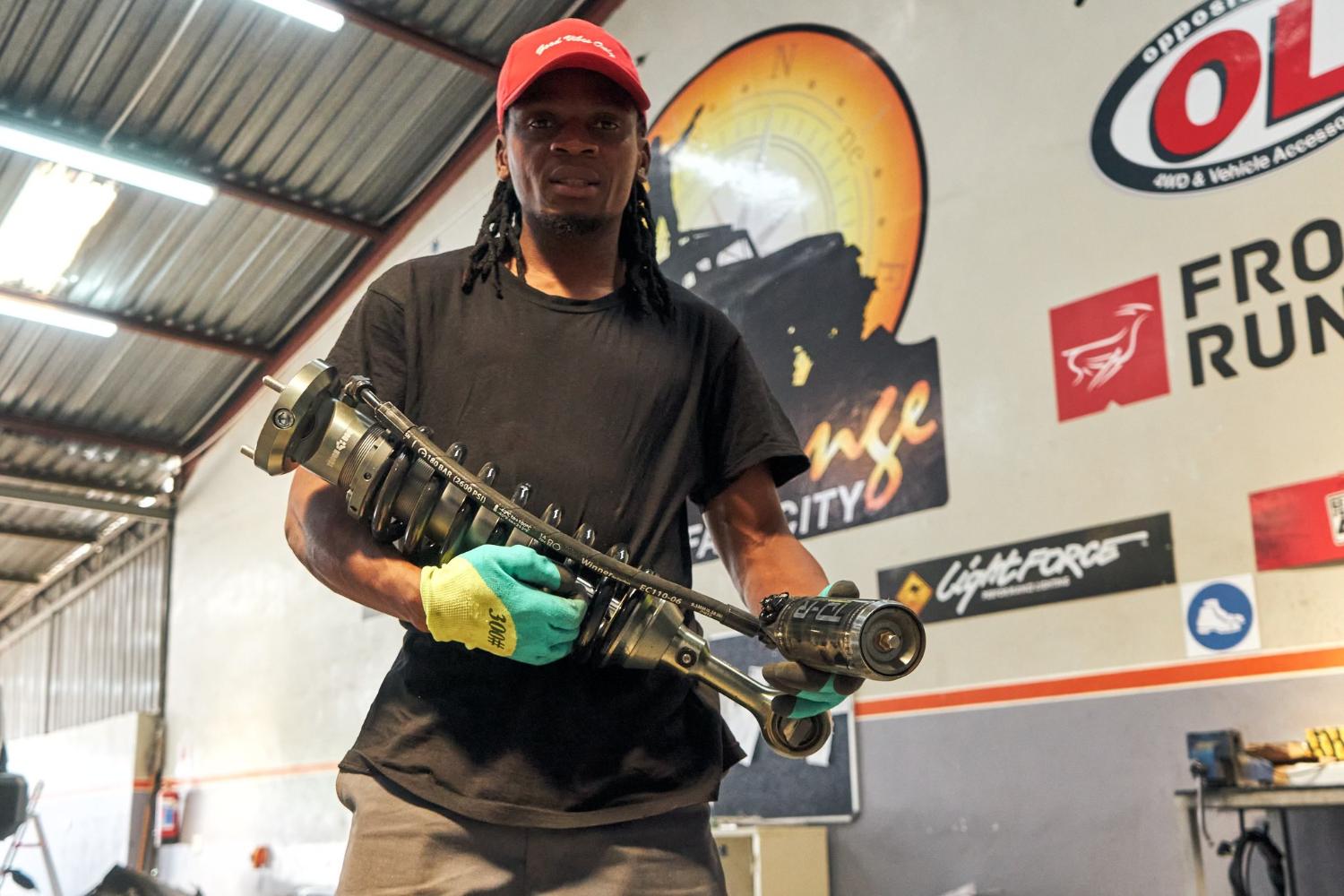
We fit Tough Dog suspension across the majority of our builds, and for good reason. Their adjustable units offer nine stages of damping adjustment, meaning you can run firmer on the highway and dial it back when you hit the sand tracks. The Ralph shock absorbers feature a 50mm bore and 20mm chrome piston rod housed in a 70mm casing – they carry enough oil to run cool over even the most punishing Botswana terrain, all day long.
If your shocks are tired, leaking, or your vehicle is squatting noticeably under load, don’t head into the bush hoping for the best. Come in and let us assess what you’re working with.
Tyres: Your Only Contact with the Ground
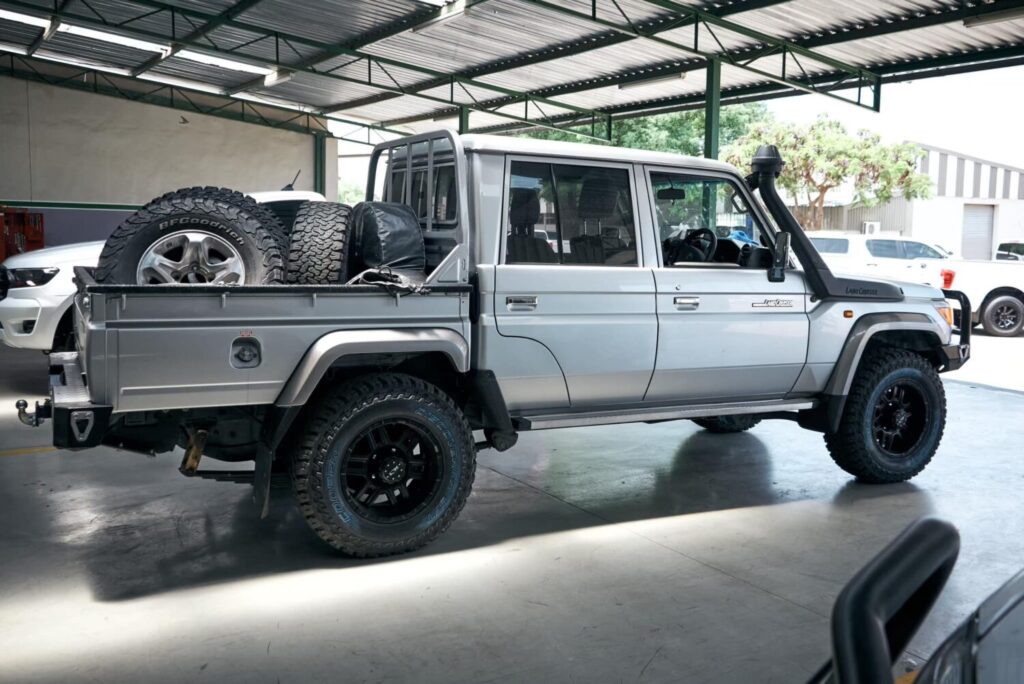
Botswana demands a lot from a tyre. In a single trip, you could cover tar, deep sand, sharp gravel, and rocky outcrops. A budget tyre that looks fine in a Gaborone parking lot can let you down badly 200 kilometres from the nearest spare.
An all-terrain tyre is the sensible choice for most dry season travellers. The tread pattern is aggressive enough to grip in sand and gravel, while still being manageable on tar over long distances. We’ve fitted Maxxis RAZR A/T and Cooper Discoverer tyres across numerous builds, and both have performed consistently in the conditions Botswana throws at them.
Equally important is knowing how to use your tyres in the field. Airing down to around 1.2 bar when you hit soft sand dramatically increases your footprint and transforms how your vehicle handles. A quality tyre deflator and a reliable portable compressor are non-negotiables for any dry season trip – make sure both are in the vehicle before you leave.
Also worth checking before the season: tread depth, sidewall condition, and the age of the rubber. Tyres degrade with UV exposure even when they’re not being used, and a blowout in deep sand is the kind of problem you want to avoid.
Recovery Gear: Because It’s Not If, It’s When
No matter how experienced the driver or how capable the vehicle, Botswana sand has a way of humbling everyone. We’ve been stuck. Our customers have been stuck. We’ve watched seasoned overlanders get swallowed by river crossings they were confident about. Recovery gear isn’t a sign that you’re not a competent driver – it’s a sign that you understand the terrain.
The essentials:
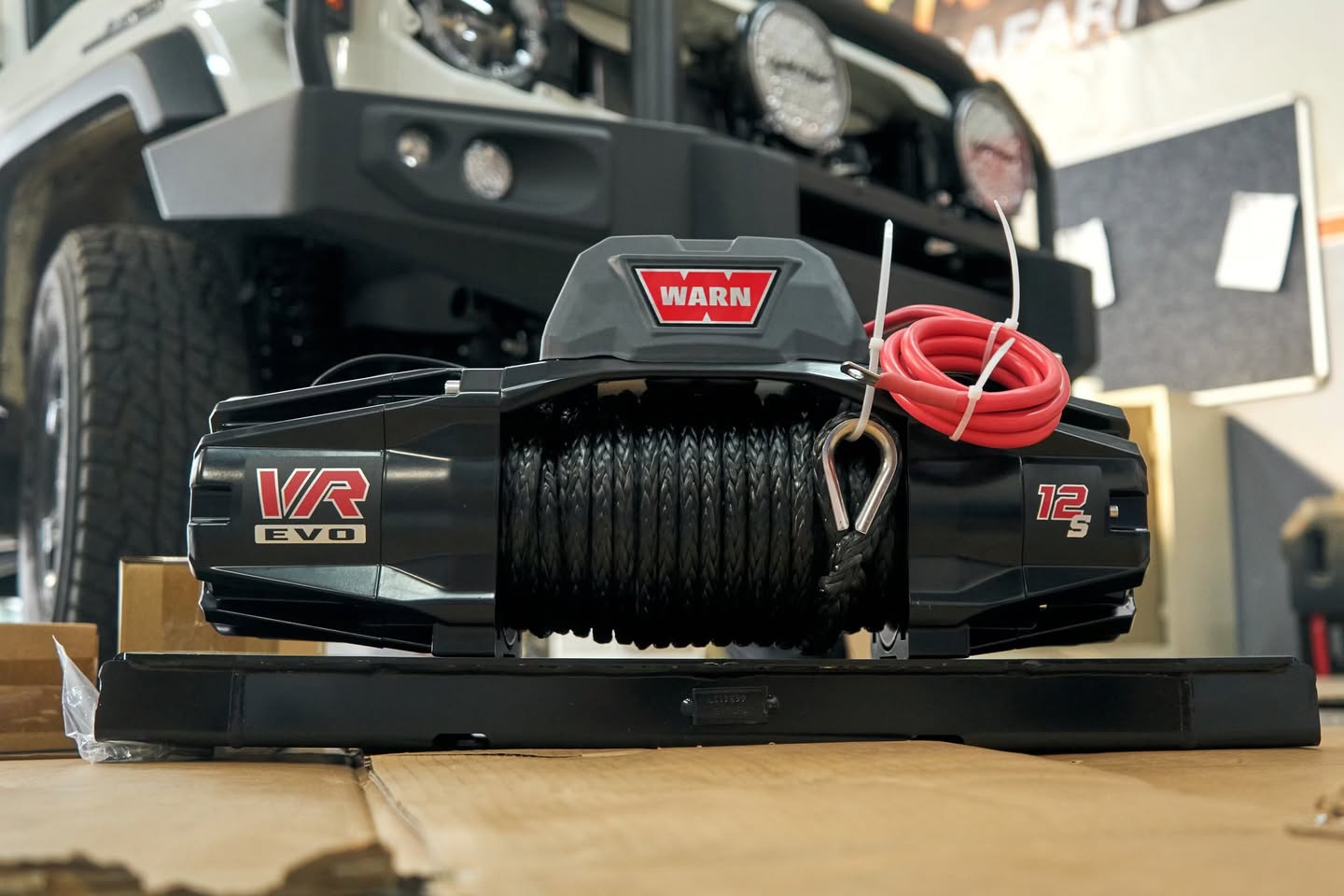
A winch. We fit Warn winches as our go-to, including the 12,000lb unit with synthetic rope on a number of our builds. Synthetic rope is significantly safer than steel cable if it snaps under load, and it’s lighter and easier to handle. A winch is most useful when there’s a tree, another vehicle, or a ground anchor to pull from – make sure you carry a snatch block and tree saver strap as part of the kit.
A snatch strap. A kinetic recovery strap uses the elasticity of the rope to build momentum and pull a vehicle free, rather than the sudden jerk of a static tow rope. Know the difference, and know your vehicle’s recovery points before you need them.
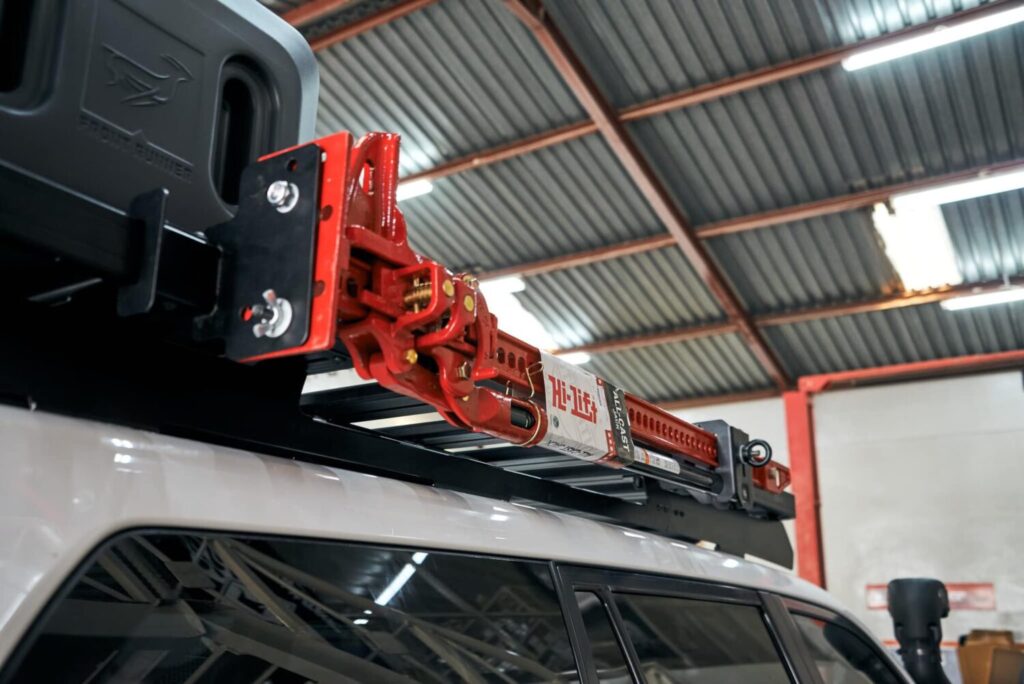
A hi-lift jack. In deep sand or on uneven terrain, a standard trolley jack is useless. A hi-lift jack can lift, winch, and clamp – it’s one of the most versatile recovery tools available and earns its space on any build.
Traction boards. Place them under the spinning tyres and they give you the grip to drive out of the boggy spot. Invaluable in soft sand, especially when you’re travelling solo.
If you aren’t sure whether your recovery kit is fit for purpose, bring the vehicle in. We’re happy to look over what you’ve got and advise on any gaps.
Lighting: Don’t Underestimate the African Night
Winter nights in the Kalahari and Chobe regions are genuinely dark – and the animals that are most active at dusk and dawn are often exactly the ones you don’t want to hit at speed. Standard headlights are simply not adequate for serious bush driving.
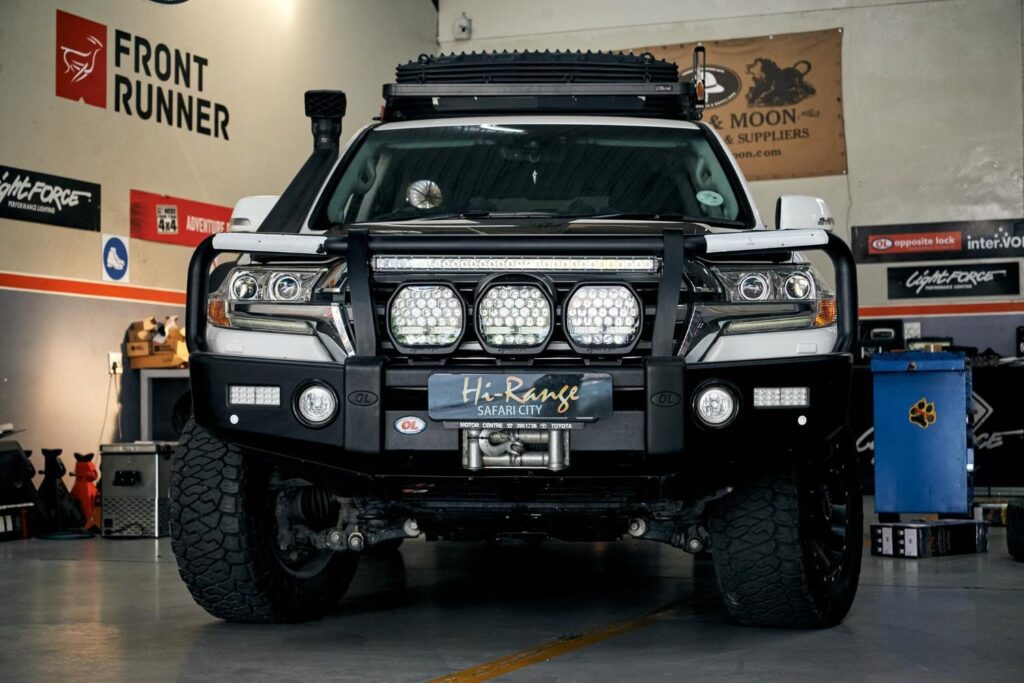
We fit LightForce spotlights across our builds – the Genesis and LED 215 units are firm favourites, paired to a quality bullbar from PIAK or Opposite Lock that gives you a solid mounting point and front-end protection at the same time. If you’re doing any night driving, this is an upgrade worth making.
Power and Storage: The Creature Comforts That Keep You in the Bush Longer
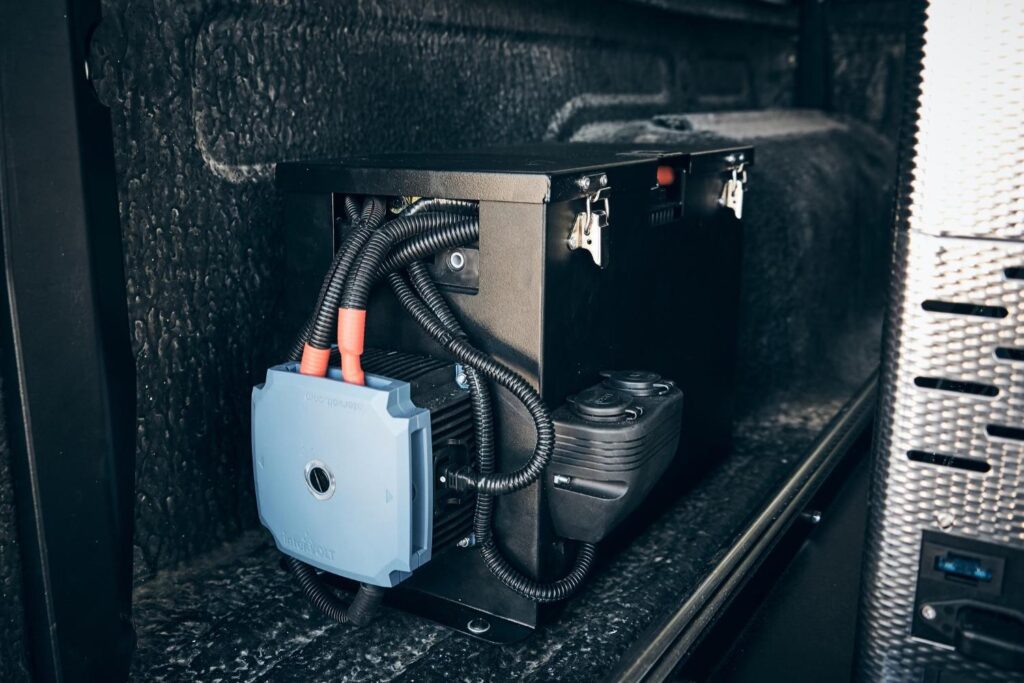
A dual battery system with a quality battery management unit means your camping fridge, lighting, and charging points run off an auxiliary battery, leaving your starter battery untouched. We’ve fitted Intervolt battery management systems paired with Enertec Lithium Ion batteries on numerous builds, and alongside a National Luna fridge, it’s a setup that performs reliably over extended trips.
On top of the vehicle, a Front Runner roof rack gives you a secure, modular platform for additional storage – whether that’s a rooftop tent from AluCab, a storage box, or fuel and water jerry cans. The Slimline II Roof Rack is a popular choice for Land Cruiser and Hilux owners especially, and the modular bracket system means you can configure it exactly to your needs.
Storage inside the load bay is just as important. A properly built drawer system keeps your gear organised, accessible, and protected from the dust that will find its way into everything.
Don’t Leave It Too Late
Our fitment centre gets busy from April onwards as the dry season approaches. If you want your vehicle ready for a May or June trip, now is the time to come in, not the week before you leave.
Whether you need a full pre-season build, a suspension upgrade, new rubber, or just a once-over on your recovery kit, the Hi-Range Safari City team is here to help. We don’t just fit this gear – we use it. And we’ll make sure your vehicle is ready for wherever the season takes you.
Get in touch with us today – we’d love to get your 4×4 sorted before the season starts.